From the President’s Desk
By: Anat Vidor, WIZO President
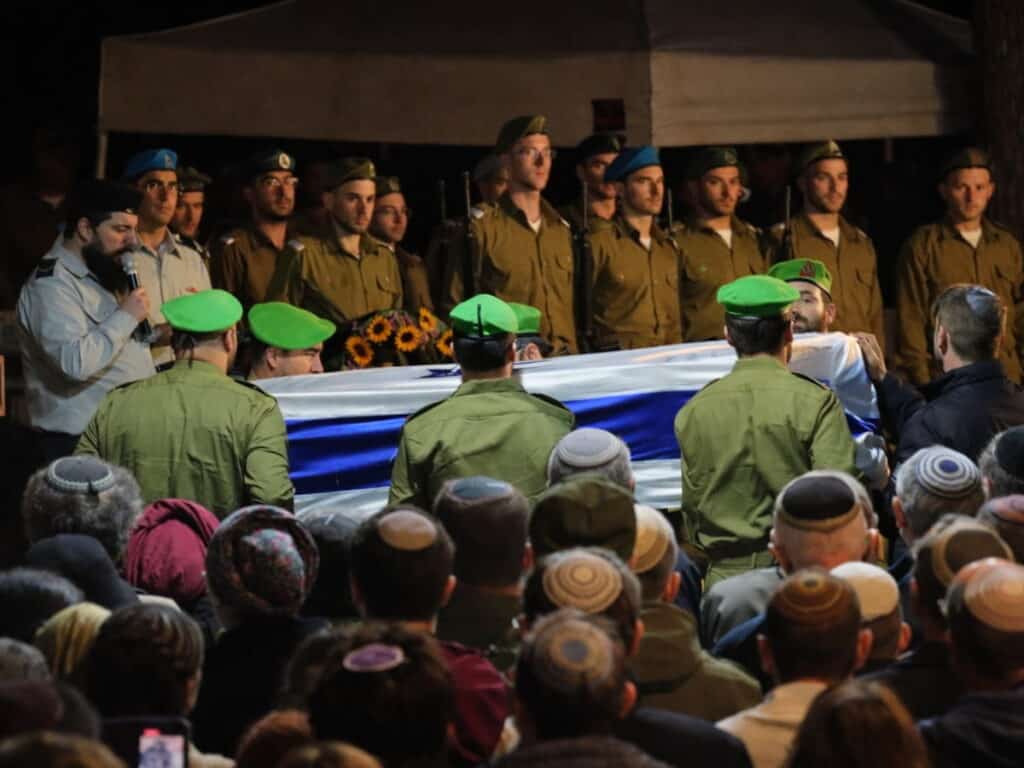
On Memorial Day, as the chilling silence of the siren envelops the cemeteries, we once again utter the words that have become the secular elegy of Israeli society: “In their death, they commanded us to live.”
Over the years, we have cloaked this phrase in a comforting pathos; we have turned it into a hymn of solace whispered over fresh graves in an attempt to soften the cruel contours of bereavement.
Yet, if we listen honestly and fearlessly to the echo of these words, originally penned by Hayim Nahman Bialik regarding our ancestors who fought for their spiritual existence in the face of annihilation, we will find no comfort in them. This phrase is not romantic poetry; it is a flashing warning light. It is a stern moral beacon, an imperative demanding that we hold ourselves accountable for how we realize our future.
Why did they “command us to live”?
Because our fallen, and the society from which they emerged, never sanctified death itself as an absolute, heroic ideal. For generations, and ever more intensely in the face of the Holocaust’s inferno, Jewish society grappled with the tension between the readiness for martyrdom and the supreme value of the sanctification of life. Staring into the abyss of extermination, our choice as a people was clear: we chose the sanctification of life. The Zionist movement, too, was fundamentally conceived as a political movement that sought diplomatic consensus, building, and creation, not war. The necessity to take up the sword was forced upon us time and again as a last resort for survival, not as a heroic ideal.
This profound unease is etched into the evolution of Israeli culture. Over the decades, our national arts have shifted from an uncomfortable awe of the battlefield to an open expression of grief over the “waste of life.” By stripping away the heroic veneer, this trajectory reflects a society that refuses to make peace with the loss of its children.
Yet, confronting such profound bereavement carries the peril of moral inversion. Terrified that our loved ones “fell in vain,” a society may transform the state into an entity that demands endless sacrifice merely to justify its own existence. This subjugation of the individual to the state risks blurring the line between us and our enemies, who sanctify death for their morbid ideologies.
We risk falling prey to a dreadful optical illusion, believing that the only way to honor the blood of the fallen is to demand more blood, prolong wars, and elevate the act of sacrifice itself to a supreme value. When memory subjugates a nation’s future to the traumas of the past, rather than serving as a moral compass, it becomes an instrument of corruption.
Ze’ev Jabotinsky’s principle that “Every individual is a king” serves as a fortress against this peril. He insisted that society exists for the individual, not the individual for the state. To him, the state’s purpose is to protect life, not to consume it upon an ideological altar.
“In their death, they commanded us to live” is thus a severe warning against the glorification of war.
Menachem Begin understood this profoundly. When he stood before the Knesset in 1979 to present the historic peace treaty with Egypt—a mere six years after the fracture of the Yom Kippur War—he was required to make agonizing concessions. Yet, he was not deterred by the misconception that peace would “dishonor” the fallen. On the contrary; he declared that the political compromise was made possible solely by the grace of our holy heroes. In his diplomatic addresses, he quoted the words of Psalms, “Righteousness and peace have kissed,” and unequivocally established: Peace is not a betrayal of the fallen, but the purest realization of their testament. The pinnacle of historical justice is the creation of a reality of peace for future generations.
Begin recognized that honoring the fallen requires building a future for the living. Yet, the burden of this true heroism resides with the bereaved families. Echoing Begin’s tribute to the “mothers of the sons, who do not complain,” it is they who release us from the instinctual debt of vengeance and the blind narrative of perpetual justification that so often obstructs peace.
On this Memorial Day, amidst a relentless war and the daily heartbreak of new fallen soldiers, I salute the bereaved families. They are the compass of our Zionist DNA, reminding us that the sanctification of life supersedes all. Unlike our enemies’ totalitarian culture that glorifies death, our victory lies in discerning when sacrifice is a true existential necessity, rather than a hollow test of loyalty.
To achieve the “total victory” we hear so much about, we must remain a vigilant civil society that refuses to be enslaved by inflammatory rhetoric. True victory is the profound understanding that the ultimate triumph we yearn for is to be a society that will do everything in its power not to sacrifice lives. It is the ability to sever bereavement from blind patriotism and to preserve the sanctity of life.
This is the beating heart of Zionism. By virtue of these values, in their death, they have indeed commanded us to live.