“The Freedom to Think. The Responsibility to choose”
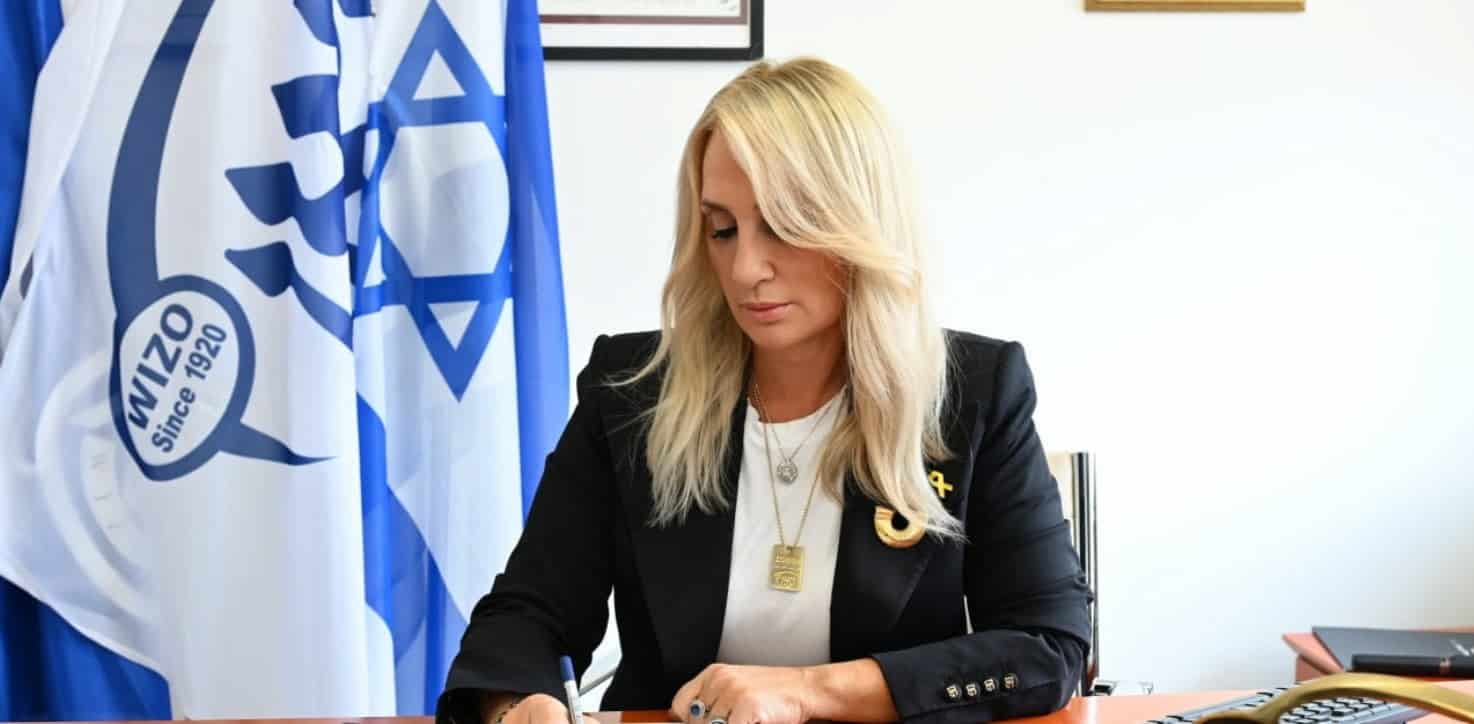
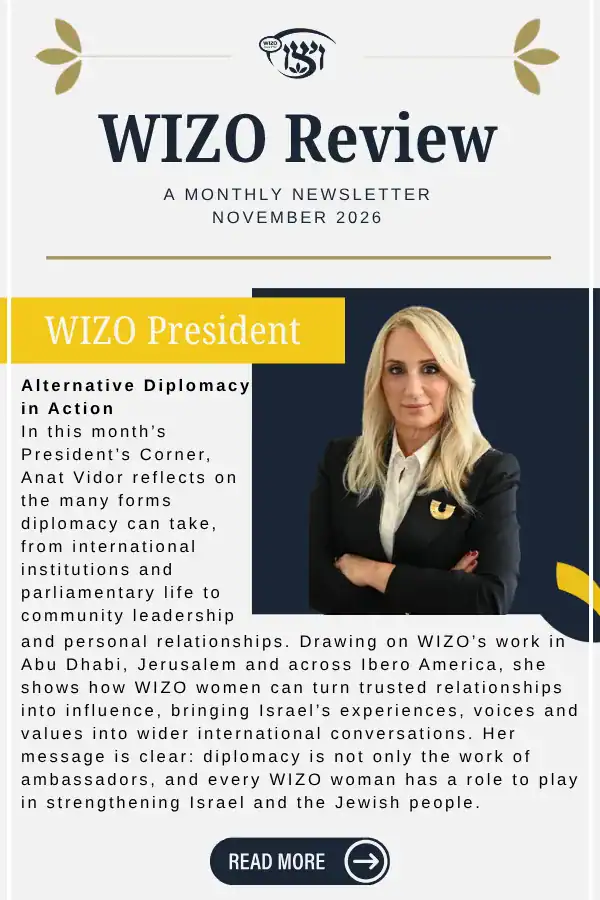
By: Anat Vidor, WIZO President
People often ask me which political party I belong to.
My answer is simple: I belong to no party. I belong to myself, to my family, to my state, and to the Jewish people.
I vote according to the values I hold and the future I believe Israel needs. In each election, I support the party I believe is best able to advance those values. My freedom to vote is also my freedom to choose.
It does not depend on loyalty to a party, but on responsibility to the principles I believe in.
I am free to support a party, question its decisions, reconsider my position, and choose differently.That freedom belongs to all of us. In a society as diverse as ours, people can disagree profoundly and still care deeply about the same country.
At a time of division, we need to remember what democracy makes possible: shared decisions without requiring identical convictions, and a common future in which everyone has a place.
Democracy rests on human dignity, freedom of thought, equality before the law, and respect for disagreement.
Those who win an election assume responsibility for the whole public, including those who voted differently.
These values need institutions that protect them: a legislature that exercises oversight, an executive accountable for its decisions, an independent judiciary, and a free press.
Their purpose is to ensure that power remains answerable to the people it serves.
We cannot exercise independent judgement without access to independent information.
Immanuel Kant, an eighteenth-century German philosopher, urged people to use their own understanding rather than relying blindly on the judgement of others.
Hannah Arendt, a twentieth-century Jewish political thinker, explained why freedom of opinion depends on access to factual information. Their ideas remind us that forming a position requires more than adopting the view of someone we trust.
Political belonging should never relieve us of that responsibility. When “our side” must always be right, we stop examining decisions and begin defending identities.
The ability to challenge our own leaders keeps our loyalty anchored in principles.
Jewish history gives us particular reason to take this seriously.
In June 1933, Jews constituted approximately 0.75 per cent of Germany’s population. Nazi propaganda falsely blamed them for national defeat, economic suffering, and a supposed global conspiracy. The regime dismantled the free press while making these falsehoods part of its machinery of persecution. A claim must be examined through evidence and context.
Neither the authority of its speaker nor the frequency of its repetition makes it true.
Politics, in its broader sense, is how people organise authority, set priorities, and make collective decisions. Wherever power is entrusted, the principles of accountability, fair procedure, and freedom to question matter. Authority is a responsibility to serve a shared purpose; it is never ownership of that purpose.
As Israelis prepare to vote, we should remember that Israel belongs to the entire Jewish people: to those who live here, to those who support her from abroad, and to every Jew who sees in Israel a shared national home and responsibility.
The choices made by Israeli citizens at the ballot box matter profoundly, but the future of Israel concerns us all.
May we, as a society and as the Jewish people worldwide, refuse to divide ourselves into camps defined only by party affiliation or political identity.
May we remember that the party we choose is not who we are. It is a democratic instrument, the means we believe is right at a particular moment to advance the values and agenda we consider essential to the common good.
Every individual is a king.” — Ze’ev Jabotinsky
Democracy begins with the dignity and freedom of each person, but it does not end there. The freedom to choose carries with it the responsibility to protect the freedom of others.
May we choose thoughtfully, speak truthfully, and act with integrity.
May our choices strengthen Israel not only as a state, but as a shared home, worthy of the sacrifices that built it and of the generations who will inherit it.
Anat Vidor
President, World WIZO